E-commerce and head-lice treatment centres
An AI advisor on the website and on WhatsApp: visitors who open it buy about five times more than the site average.
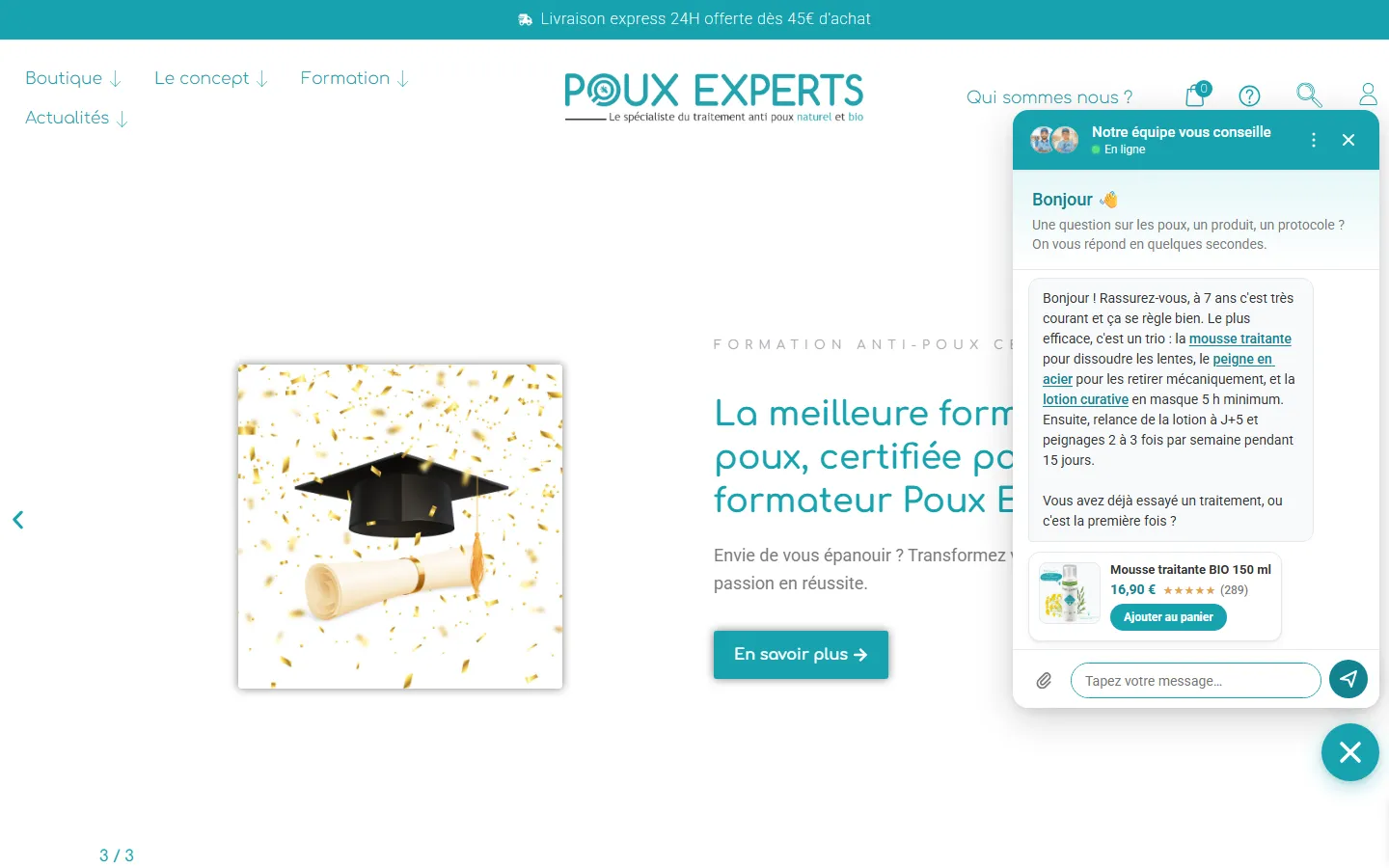
Parents who land on Poux Experts are worried, and their questions are specific: which product for which age, how long, what to do if the lice come back. The team cannot answer each of them at the moment they hesitate to buy.
What I built
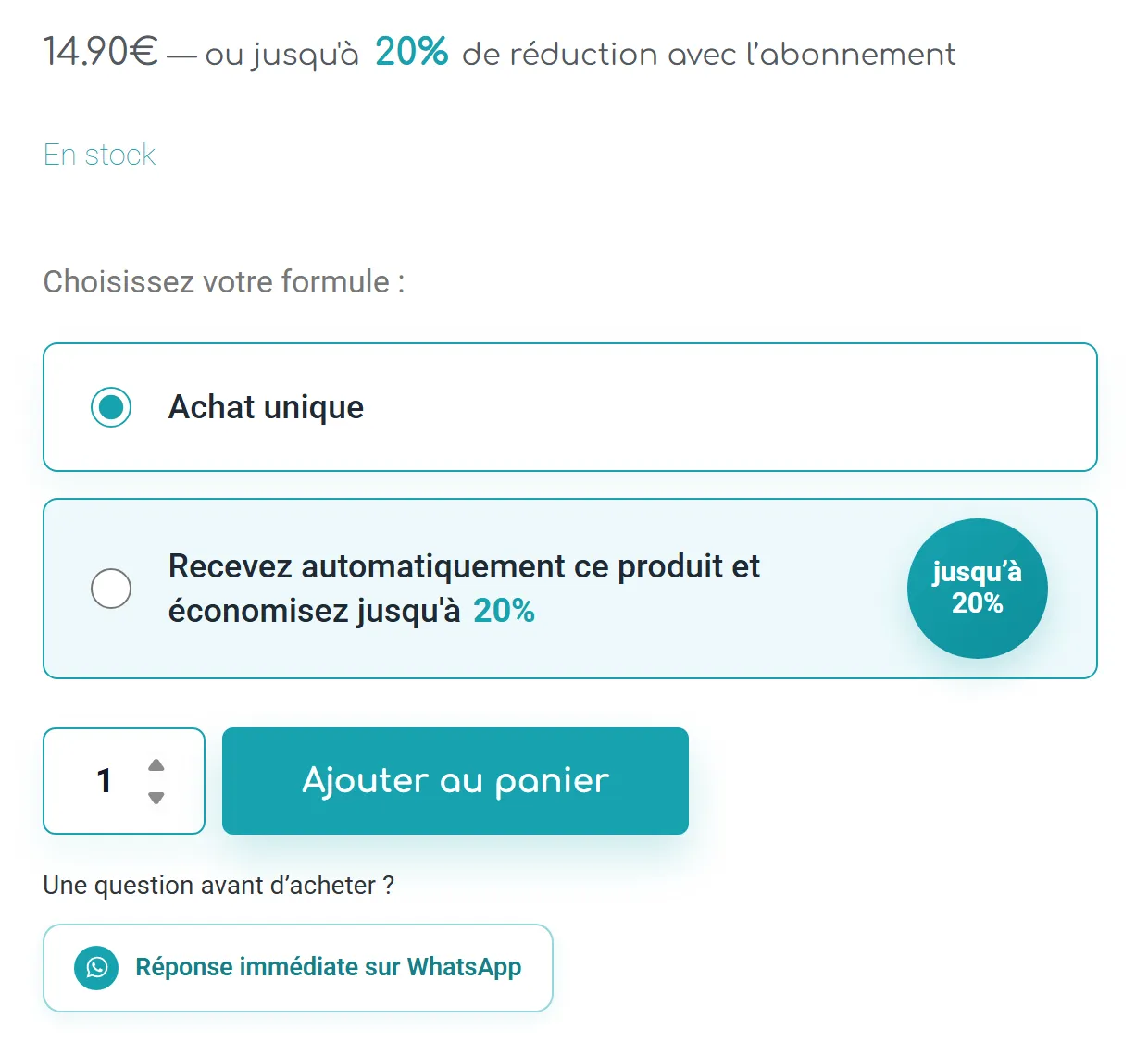
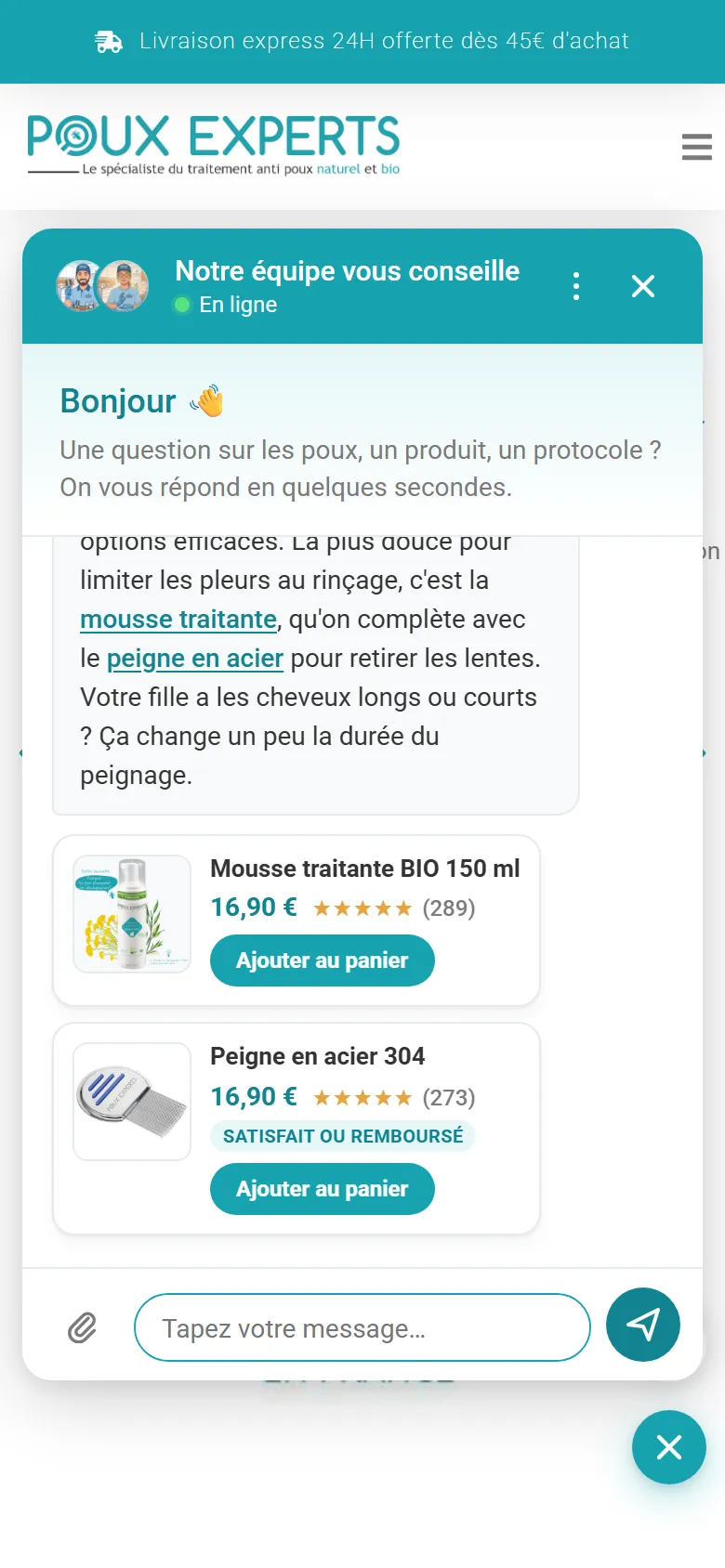
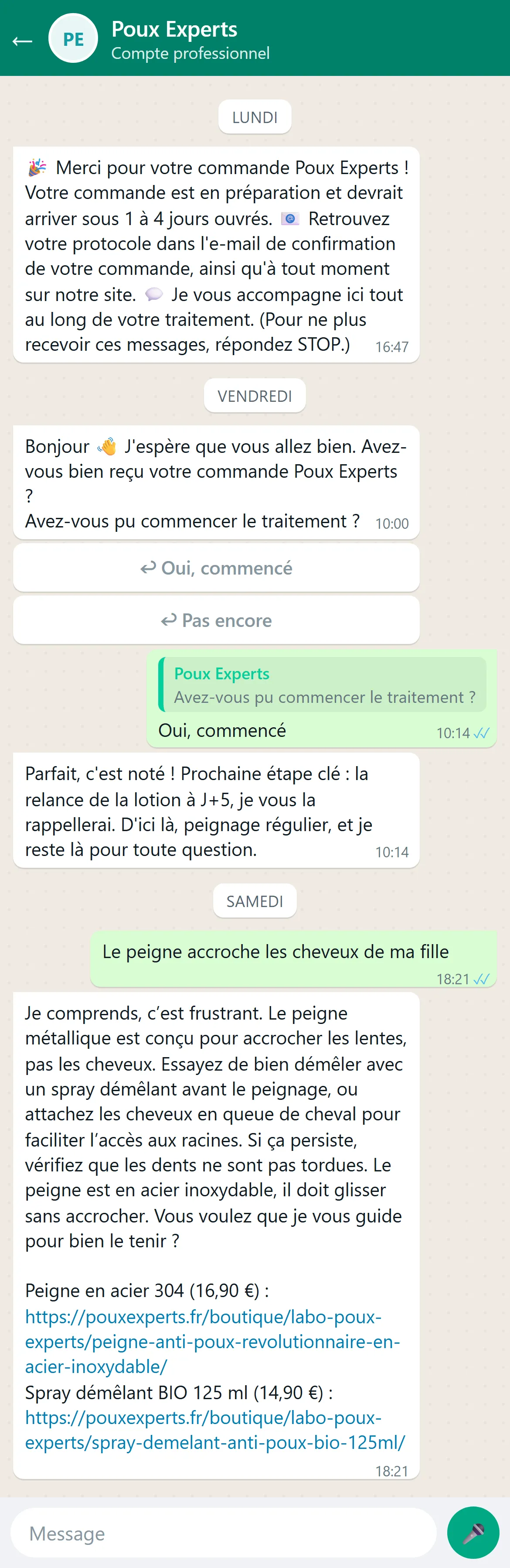
An AI advisor on every page of the website, then on WhatsApp. It explains the treatment protocol, recommends the right products and adds them to the cart, analyses a photo and points to the nearest centre.
When the situation calls for it (distress, a reaction after use, an urgent order, a professional request), it hands over to the expert. The expert is alerted on their phone, pauses the assistant, replies, then hands back. When the expert answers a new question, the assistant learns it.
Prices, reviews and stock are synced from the shop every night.
So it never makes up a price or a delay
The assistant follows rules drawn from real customer conversations, and server-side checks stop it when it steps outside them. What it must do on every message, the server verifies. Every model change is replayed on 52 reference conversations, three times, before it goes live.
The result
From July to October 2026, visitors who open the assistant buy about five times more than the site average, and one in three adds a product to the cart, against one in ten across the site. Those who open it often already want to buy: the assistant helps them pick the right product and order. The team spends far less time on recurring questions.
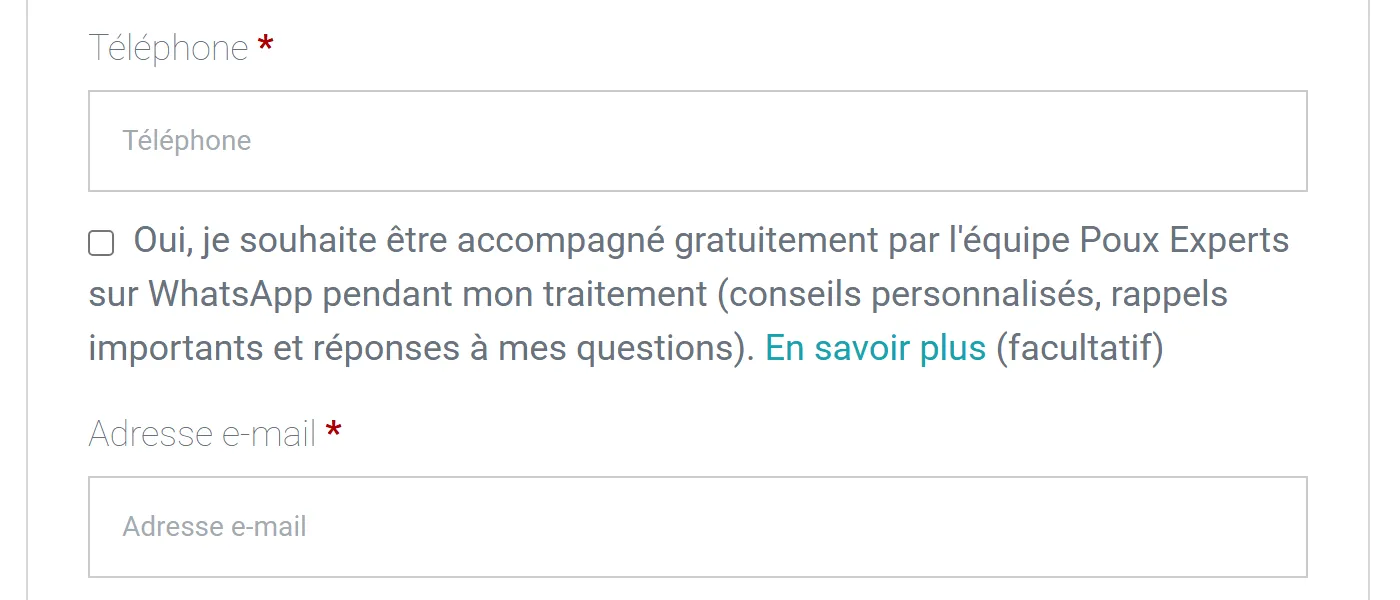
In progress: a custom CRM that brings together shop orders, WhatsApp conversations and website conversations, to follow each customer before and after the purchase, with consent collected for each phone number.
In pictures