E-commerce (furniture and lighting)
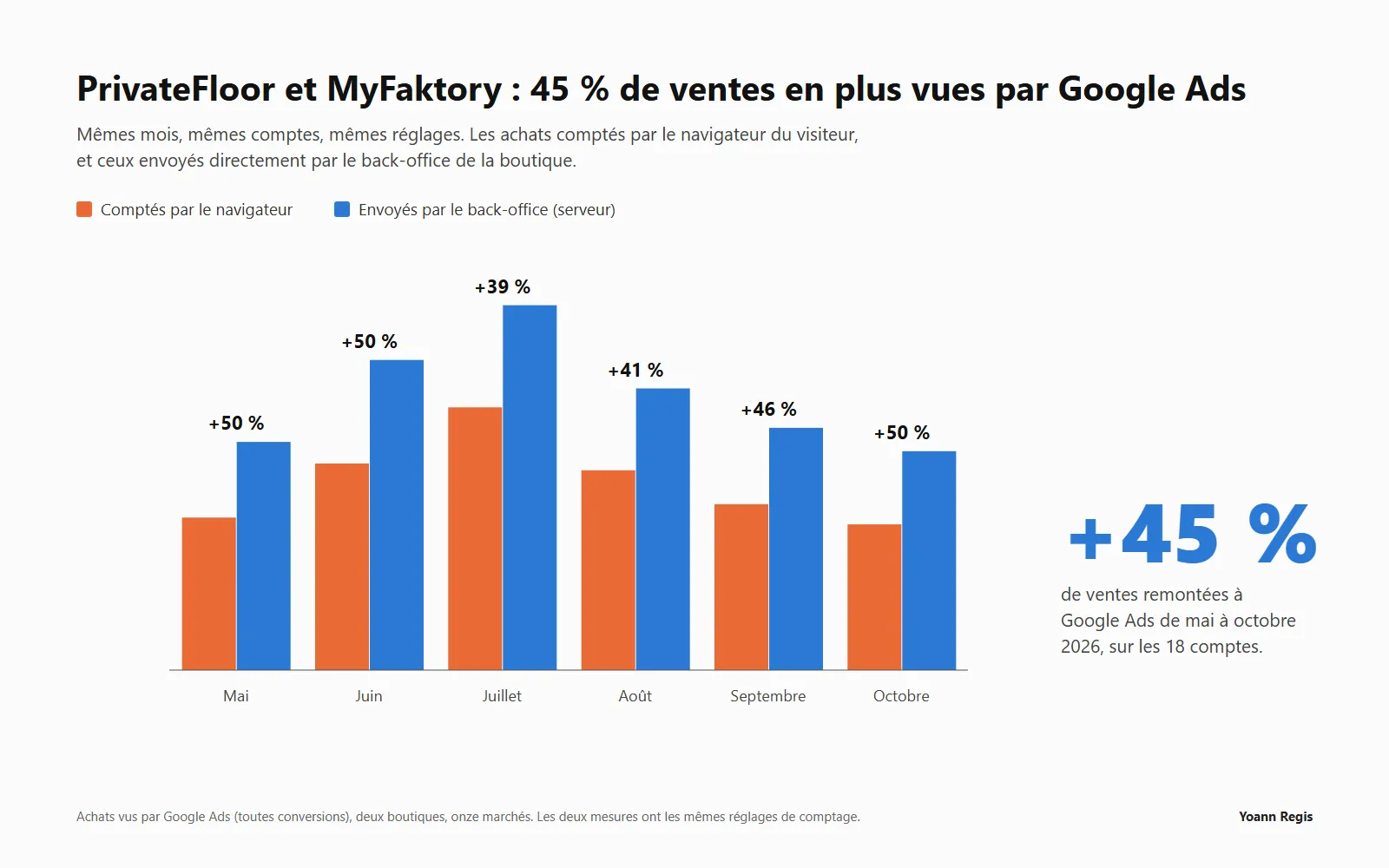
Sales sent by the back office: on the same accounts, Google Ads sees 45% more of them than through the browser.
PrivateFloor and MyFaktory are the two online shops of one company, run across eleven markets. I have looked after their measurement since 2023. To pass its sales to Google Ads without relying on the browser, the client was paying for a third-party tool.
The sale leaves from the back office
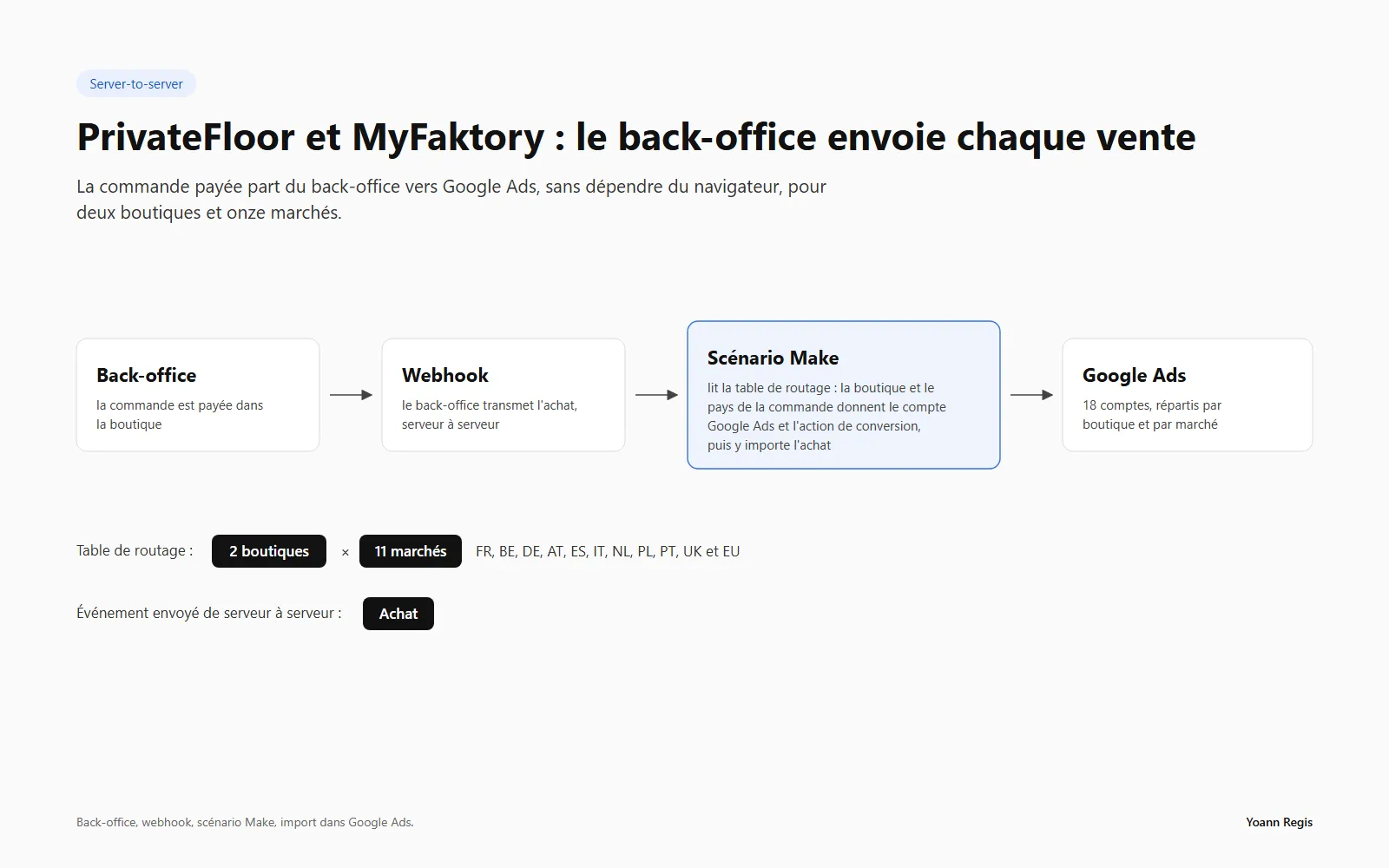
The shops’ back office is custom-built. I designed the webhook and specified it for its developer: on every paid order, it passes the sale to a Make scenario that I built. The scenario reads a routing table, which gives the right Google Ads account for each shop and each market, then imports the sale into it.
A single chain now sends the sales of two shops, across eleven markets, to their Google Ads accounts. It has been running since late March 2026.
A comparison on the same accounts
The old browser tag stayed active as a secondary action. From May to October 2026, on the same accounts, Google Ads sees 45% more sales through the back office than through the browser.
Bidding in thirteen accounts now relies on the sale sent by the back office.
The result
The third-party tool’s imports stopped in mid-April 2026, taken over by the back office. The client saved about €800 a month on a third-party tool.
In pictures